“Splinter movement” is a strange way to say “The most popular and oldest of the Hussite sects.”
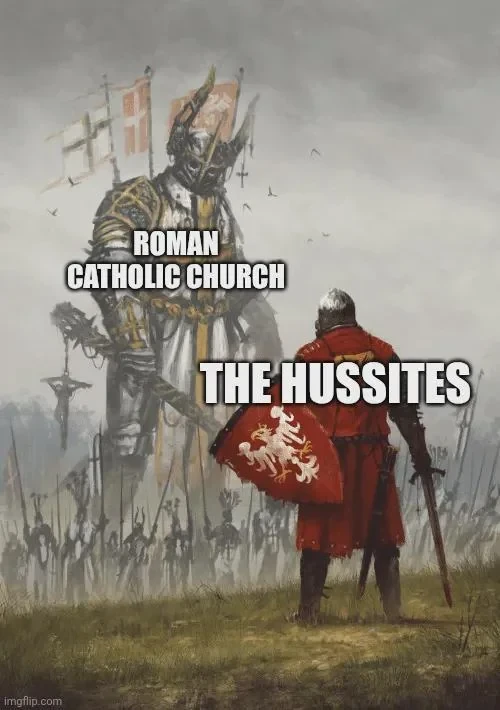
Not that a more radical victory wouldn’t have been based, but even Jan Zizka turned away from (and clashed with) many radical groups of the period. I don’t think it’s reasonable to reduce the importance of the victory just because the most radical of the groups didn’t win - the Hussites successfully repelled the Catholic crusaders and enjoyed some 200 years of religious independence.
Some of the movements of the period are really incredible, radical agrarian socialist kind of things. But they were never the main thrust of the movement.
The big divide was between the (radical, often rural) Taborites and the (moderate, often urban) Utraquists/Praguers, and both existed essentially since the very beginning of the conflict. The groups more radical than the Taborites were pretty universally suppressed by both sides. The Taborites as a military force were defeated during a period of internal conflict, but their ideals persisted in the Moravian Church. The Hussite/Utraquist Church survived all the way up to the Protestant Reformation.
Jan Zizka initially sided with the Taborites, but would later join a more moderate splinter group because he felt the Taborites were becoming too radical.
“Splinter movement” is a strange way to say “The most popular and oldest of the Hussite sects.”
Not that a more radical victory wouldn’t have been based, but even Jan Zizka turned away from (and clashed with) many radical groups of the period. I don’t think it’s reasonable to reduce the importance of the victory just because the most radical of the groups didn’t win - the Hussites successfully repelled the Catholic crusaders and enjoyed some 200 years of religious independence.
That’s interesting! I really do need to read up more on the subject as I was under the impression it had been a failed movement.
Some of the movements of the period are really incredible, radical agrarian socialist kind of things. But they were never the main thrust of the movement.
The big divide was between the (radical, often rural) Taborites and the (moderate, often urban) Utraquists/Praguers, and both existed essentially since the very beginning of the conflict. The groups more radical than the Taborites were pretty universally suppressed by both sides. The Taborites as a military force were defeated during a period of internal conflict, but their ideals persisted in the Moravian Church. The Hussite/Utraquist Church survived all the way up to the Protestant Reformation.
Jan Zizka initially sided with the Taborites, but would later join a more moderate splinter group because he felt the Taborites were becoming too radical.