I agree with most of your points, but not the last one. I think it’s perfectly OK to take an ancient work of poetry and produce a modern adaptation. This happens for many, many texts - where you can choose between a modern version that is easier to read and more “engaging” and relatable, or a more classical version where the translator tries to maintain the original nuance, structure, rhythm.
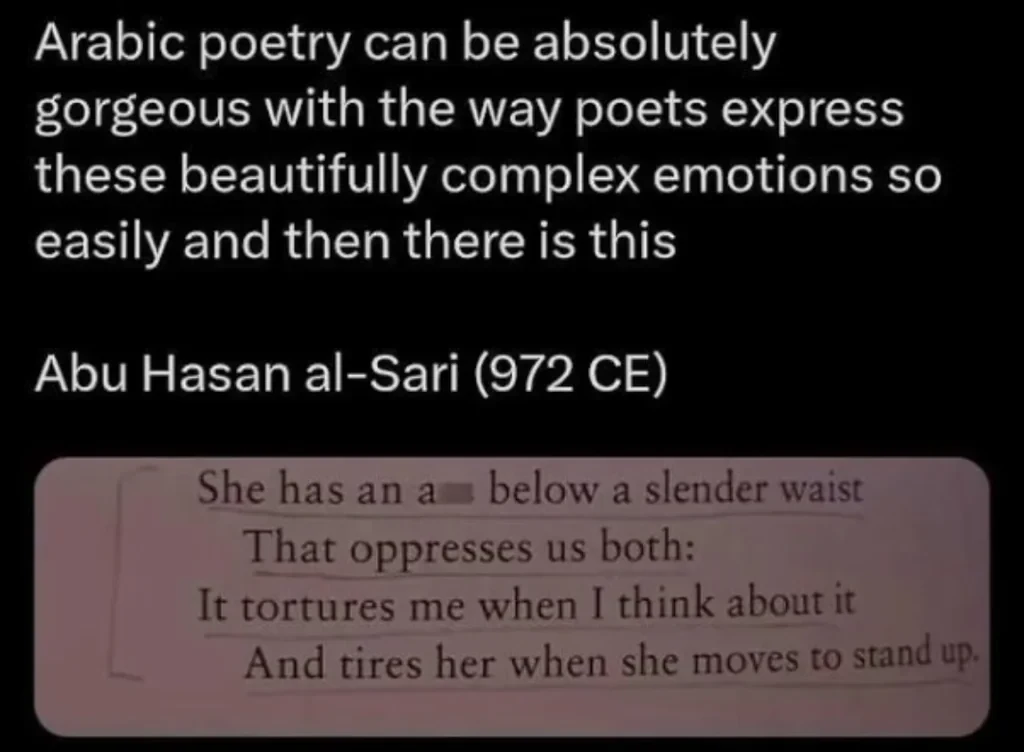
I don’t know Arabic at all so I can’t tell for sure, but the translation in the book just seems like a very poor attempt at translation, and so it fails as a modern adaptation, and fails as a “classical” translation. It’s just bad. :)


I agree with most of your points, but not the last one. I think it’s perfectly OK to take an ancient work of poetry and produce a modern adaptation. This happens for many, many texts - where you can choose between a modern version that is easier to read and more “engaging” and relatable, or a more classical version where the translator tries to maintain the original nuance, structure, rhythm.
I don’t know Arabic at all so I can’t tell for sure, but the translation in the book just seems like a very poor attempt at translation, and so it fails as a modern adaptation, and fails as a “classical” translation. It’s just bad. :)