IT WAS ALL THE SACK, ONCE IT WAS SACKED IT WAS ALL OVER 😭
For those who are curious about the actual details, the Western Roman Empire (the fall of the Empire as we generally think of it) fell around 476 AD, when the last Emperor was replaced by a Germanic warlord. But it was only marginally functional by then - Majorian (died in 461 AD) was the last real independent ruler, and Rome had been sacked twice (once in 410 AD, once in 455 AD). And even the sacks were not really a cause so much as an effect.
Rome went through a period in the 3rd century AD known as the Crisis of the Third Century, wherein the old institutions of the Empire as most of us imagine it were broken and brutalized by increasingly naked military rule, plague, economic crisis, barbarian invasions, constant civil wars, and a breakdown of government legitimacy. By 284 AD, with the ascent of the Emperor Diocletian, these issues were compounded by a curious mixture of centralized power and decentralized authority, necessitating increased taxes and repressive oversight from officials, including a form of proto-serfdom for the poor.
Over the course of the 4th century AD, the Empire’s fortunes deteriorated in every conceivable aspect, and when the Empire was split between Arcadius (Eastern Empire) and Honorius (Western Empire) in 395, the Western Empire was very clearly on its last legs, all-but-broke, unable to muster enthusiasm from its own population for its defense, and unwilling or unable to curtail the power of its elites even for the sake of self-preservation of the polity.
At that point, one is basically asking for the barbarians to sack the place for the nice narrative ribbon to tie around the decline. Especially with the sack in 410 AD - caused by the incompetent Emperor Honorius murdering his best general and best troops for the crime of being (checks notes) loyal while Germanic, leading many of them to join the Germanic tribes in opposition to Rome - who had agreed to not attack in exchange for a bribe that Honorius also welched on.
Why the sack of 476 AD? Why not the end of the Republic? Why is the Eastern Roman Empire ignored? What about the Papal State? What about modern Rome that is still a nation’s Capital?
Rome never fell and dinosaurs never went extinct (birds are dinosaurs)!
I mean, it’s pretty broadly accepted that Augustulus being deposed in 476 AD is an arbitrary cutoff point. But at the same time, it’s also pretty undeniable that by 476 AD the entity we knew as the Roman Empire, and the territory it ruled over, was, uh, in pretty bad condition. There’s some manner of severe change that was suffered through, and it helps to have a way to delineate that.
Why not the end of the Republic? What about the Papal State? What about modern Rome that is still a nation’s Capital?
Rome never fell and dinosaurs never went extinct (birds are dinosaurs)!
Without arbitrary boundaries, we wouldn’t have any boundaries at all - like how it’s difficult to tell where one species ends and another begins, so we make our random marks to have some manner of organizing the world we talk about. It’s just convention.
Why is the Eastern Roman Empire ignored?
GREEKOIDS OUT NO GREEKOIDS IN MY GOOD LATIN EMPIRE
Exactly. It’s arbitrary. Well, not entirely since there are arguments for this date and event as a cutoff, but there are other dates, other events, contingencies etc. And it is an ongoing discussion among historians.
Without arbitrary boundaries, we wouldn’t have any boundaries at all
Well, the point I’m trying to make is that we do not need a boundary here, we can accept that change is gradual.
Rome still exists, it is still a nation’s capital, it has been a seat of power all throughout its history (even when it wasn’t the seat of the (Eestern) Roman Emperor and durimg the era of italian city states, it was the popes’ seat), with the Vatican there is even a state with latin as its official language. And until the end of the tsars’ rules in Russia, there were rulers claming the titel of Roman Emperor.
Rome. Never. Fell. It is a gradual, probably still ongoing and neverending process of transformation. You can say the Roman Empire does not exist anymore. You might even say the Western Roman Empire fell in 476 AD. But then it’s weird to not also point out that the Roman Republic stopped existing when Gaius Julius Caesar came to total power. Or that the Kingdom of Rome fell in 503 BC.
And here’s the fun part: in German, the whole deal is called “Römisches Reich” - Roman Realm. The type of government does not matter here. So where do we draw the line then?
Well, the point I’m trying to make is that we do not need a boundary here, we can accept that change is gradual.
Rome still exists, it is still a nation’s capital, it has been a seat of power all throughout its history (even when it wasn’t the seat of the (Eestern) Roman Emperor and durimg the era of italian city states, it was the popes’ seat), with the Vatican there is even a state with latin as its official language. And until the end of the tsars’ rules in Russia, there were rulers claming the titel of Roman Emperor.
Rome. Never. Fell. It is a gradual, probably still ongoing and neverending process of transformation.
Okay, but the refusal of all arbitrary cutoffs leads to total incoherence in discussion, and I don’t know of any serious historical current that embraces that idea. Attempting to discuss the ‘Roman Empire’ in terms of the 19th century Russian Tsardom would be an exercise in absurdity for anything but a comparative to the generally accepted arbitrary period of the Roman Empire (which, itself, would implicitly require acknowledgement that the 19th century Russian Tsardom is not the Roman Empire).
You can say the Roman Empire does not exist anymore. You might even say the Western Roman Empire fell in 476 AD. But then it’s weird to not also point out that the Roman Republic stopped existing when Gaius Julius Caesar came to total power.
… but the change from the Roman Republic to the Roman Empire with the ascension of Augustus is a commonly discussed cutoff in historiography?
That’s not what I’m doing though. I’m refusimg this specific point as a cutoff. And at the very least, we should not talk about this event as “the Fall of Rome”, because it isn’t. Because even if you want to have a fall of the Western Roman Empire, there needs to be acknowledgement and communication, that it was a long process and not a singular event.
That’s why I compare it to the extinction of dinosaurs. Even if you don’t want to acknowledge birds as dinosaurs, the extinction was not “an asteroid crashed into earth and boom, dinosaurs gone”, it was a process over thousands of years that includes a lot of climate related change in selection pressures, change in habitation conditions, change in nutrition conditions, etc.
but the change from the Roman Republic to the Roman Empire with the ascension of Augustus is a commonly discussed cutoff in historiography?
Or that the Kingdom of Rome fell in 503 BC.
That’s also acknowledged?
Not as a catastrophic event, but in a step of the “evolution”, a change in how the Roman Realm is constituted.
That’s not what I’m doing though. I’m refusimg this specific point as a cutoff.
Okay, but you go on to cite the Papal States and then the Russian Tsardom as part of the era of the Roman Empire, which they are not in any meaningful sense.
And at the very least, we should not talk about this event as “the Fall of Rome”, because it isn’t.
It is quite clearly the fall of a formerly cohesive polity that ruled over much of Europe and parts of Asia and Africa.
Because even if you want to have a fall of the Western Roman Empire, there needs to be acknowledgement and communication, that it was a long process and not a singular event.
… I literally traced out some ~250 years of process in my comment.
That’s why I compare it to the extinction of dinosaurs. Even if you don’t want to acknowledge birds as dinosaurs, the extinction was not “an asteroid crashed into earth and boom, dinosaurs gone”, it was a process over thousands of years that includes a lot of climate related change in selection pressures, change in habitation conditions, change in nutrition conditions, etc.
Okay, but no one is going to seriously claim that birds are dinosaurs. Birds as dinosaurs is a very tongue-in-cheek trope.
The dinosaurs went extinct. That happened. An asteroid was involved. It doesn’t have to be a ‘singular event’ wherein all dinosaurs died inside of a day for all of those things to be true and talking about the mass extinction of the dinosaurs due to an asteroid collision changing Earth’s environment to be valid.
Not as a catastrophic event, but in a step of the “evolution”, a change in how the Roman Realm is constituted.
… the collapse of the Western Empire was a catastrophic event, and the counter-view that life in Western Europe went on largely unchanged or changing only by small degrees is not a position that has had mainstream acceptance since increased emphasis on archeological evidence in the 1980s.
Okay, but you go on to cite the Papal States and then the Russian Tsardom as part of the era of the Roman Empire, which they are not in any meaningful sense.
What? No, I didn’t. And I honestly have nonIdea what makes you think that. I referred to the russian Tsardom as evidence for someone claming the title of Emperor or Rome and the Papal States as an example of Rome beimg of continued significance! How do you make that into me claiming both to be part of the Roman Empire???
It is quite clearly the fall of a formerly cohesive polity that ruled over much of Europe and parts of Asia and Africa.
Not really, especially the part about the cohesiveness. That is the centuries long process I am talking about. There were civil wars, a divided Empire in the third century, etc. It was a gradual, though not linear, progress. Augustulus wasn’t even the last Western Roman Emperor, that was Julius Nepos who died in 480 while the Imperial Court was in Ravenna until 554. The split into Eastern and Western Roman Empire happened long before though, dividing control already.
… I literally traced out some ~250 years of process in my comment.
In this case I used “you” more in a general sense, not necessarily you personally.
Okay, but no one is going to seriously claim that birds are dinosaurs. Birds as dinosaurs is a very tongue-in-cheek trope.
Actually, no. Birds evolved from species in the clade of dinosaurs and species cannot develop out of a clade. Birds are dinosaurs because they’re descendents of other dinosaurs.
It doesn’t have to be a ‘singular event’ wherein all dinosaurs died inside of a day for all of those things to be true and talking about the mass extinction of the dinosaurs due to an asteroid collision changing Earth’s environment to be valid.
But that is generally how the public sees it. Maybe some will say it took a few years because clouds blocked out sunlight, but compared to the tens of thousands of years the process actually took, in the minds of the general public it’s a ridiculusly short period.
the collapse of the Western Empire was a catastrophic event
For whom? Some few high ranking politicians, nobility and stuff. Not much for regular people, like farmers, tradesfolk and such. Not even for citizens of the City of Rome. There were sacks before, nothing special.
What? No, I didn’t. And I honestly have nonIdea what makes you think that. I referred to the russian Tsardom as evidence for someone claming the title of Emperor or Rome and the Papal States as an example of Rome beimg of continued significance! How do you make that into me claiming both to be part of the Roman Empire???
If your response to someone claiming that the Roman Empire fell is to cite the Papal States and the Russian Tsardom as proof that Rome never fell (that being your core point, which you emphasized with punctuation), do you not see how that, in order to be a refutation, necessarily implies that the argument is putting forth the Papal States and Russian Tsardom as, in some way, the Roman Empire?
Not really, especially the part about the cohesiveness. That is the centuries long process I am talking about. There were civil wars, a divided Empire in the third century, etc.
Civil wars do not mean a breakdown of all the institutions of the Roman Empire.
Augustulus wasn’t even the last Western Roman Emperor, that was Julius Nepos who died in 480 while the Imperial Court was in Ravenna until 554.
Which one is regarded as the last legitimate Emperor and why is a matter of debate, but neither option matters considering that the acknowledgement that the exact cutoff date is arbitrary is one of the first things I mentioned in this discussion. You claim that you’re just arguing against this specific arbitrary cutoff date for the fall of Rome, but also say, and I quote:
Well, the point I’m trying to make is that we do not need a boundary here, we can accept that change is gradual.
Rome still exists, it is still a nation’s capital, it has been a seat of power all throughout its history (even when it wasn’t the seat of the (Eestern) Roman Emperor and durimg the era of italian city states, it was the popes’ seat), with the Vatican there is even a state with latin as its official language. And until the end of the tsars’ rules in Russia, there were rulers claming the titel of Roman Emperor.
Rome. Never. Fell. It is a gradual, probably still ongoing and neverending process of transformation.
These are not reconcilable positions you are putting forward. These arguments - both from you - are mutually exclusive.
The split into Eastern and Western Roman Empire happened long before though, dividing control already.
Again, the split between east and west does not mean the breakdown of all the major institutions of the Roman Empire.
In this case I used “you” more in a general sense, not necessarily you personally.
… then what are you even disputing? This is literally your second response in this comment chain:
That’s not what I’m doing though. I’m refusimg this specific point as a cutoff. And at the very least, we should not talk about this event as “the Fall of Rome”, because it isn’t. Because even if you want to have a fall of the Western Roman Empire, there needs to be acknowledgement and communication, that it was a long process and not a singular event.
Actually, no. Birds evolved from species in the clade of dinosaurs and species cannot develop out of a clade. Birds are dinosaurs because they’re descendents of other dinosaurs.
So now you are refusing all arbitrary cutoffs? All life belongs to one clade by most conceptions of abiogenesis, with one common ancestor for bacteria and humans alike. Are humans then bacteria?
But that is generally how the public sees it. Maybe some will say it took a few years because clouds blocked out sunlight, but compared to the tens of thousands of years the process actually took, in the minds of the general public it’s a ridiculusly short period.
Most people who are aware of the basic idea of evolution understand that it took thousands of years, not a few dozen. Arguably, more people are ignorant of the basic idea of evolution than should be, but at that point, you’re dealing with a very different issue.
For whom? Some few high ranking politicians, nobility and stuff. Not much for regular people, like farmers, tradesfolk and such. Not even for citizens of the City of Rome. There were sacks before, nothing special.
… fucking what.
The collapse of the Roman Empire led to a serious and massive regression in material and organizational culture across a broad swathe of Europe for all classes, not just the rich.
The idea that the Roman Empire didn’t positively and significantly affect the lives of the working class and peasantry which made up the vast majority of its population is not a serious position.
There had not been ‘sacks before, nothing special’ - the sack in 410 AD was the first sack of Rome in 800 fucking years.
I’d draw the line at the Holy Roman Empire, whose name itself is a big lie composed of three individual lies. Neither holy, nor Roman, nor a proper united empire.
The bloody Sultanate of Rum has more legitimacy of being a successor to the Roman empire than the self-professed Holy Roman Empire.
I think it actually depends on what you’re into or studying.
I like architecture and infrastructure so I tend to count from when infrastructure spread stops in an area especially with Rome (the empire, not the state) since their power receded in stages regionally.
If you look at architecture you do though, expensive materials receded more towards seats of per regionally, projects abandoned so on and so forth.
Not necessarily the style but how they’re actually built, materials and such. Solid wall v. with junk infill, things where it starts with a more expensive or materially intensive techniques into ones where it’s cheaper.
Also pottery is a pretty good indicator of how people are living at the time and a lot ends up inside or below construction as it is built.
A layman’s reading of the East/West split reminds me of a private equity firm loading up a division with mediocre assets and debt, only to be spun-off to inevitable bankruptcy after a few years.
I wonder if the Eastern empire saw the West as not worth governing/reconquering… or when they split were they more equals?
I wonder if the Eastern empire saw the West as not worth governing/reconquering… or when they split were they more equals?
In general, the Eastern Empire was always the wealthier half of the Empire. But for much of the Roman Empire, the Western half was politically and militarily dominant. By the time of the formal split, however, the Western half was very clearly the less healthy of the two.
The Eastern Empire made some attempts to reclaim control over the West - notably during the reign of Justinian, with the reconquest of Italy and parts of Africa - but ultimately it was less that they didn’t see it as worth it, and more that the Eastern Empire (sometimes called the Byzantine Empire in its later periods) could barely hold onto what it already had. It would spend the next ~1000 years shrinking as neighboring polities took bite after bite out of it.

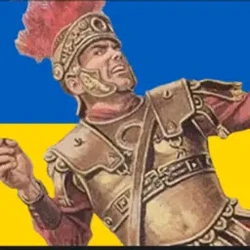

IT WAS ALL THE SACK, ONCE IT WAS SACKED IT WAS ALL OVER 😭
For those who are curious about the actual details, the Western Roman Empire (the fall of the Empire as we generally think of it) fell around 476 AD, when the last Emperor was replaced by a Germanic warlord. But it was only marginally functional by then - Majorian (died in 461 AD) was the last real independent ruler, and Rome had been sacked twice (once in 410 AD, once in 455 AD). And even the sacks were not really a cause so much as an effect.
Rome went through a period in the 3rd century AD known as the Crisis of the Third Century, wherein the old institutions of the Empire as most of us imagine it were broken and brutalized by increasingly naked military rule, plague, economic crisis, barbarian invasions, constant civil wars, and a breakdown of government legitimacy. By 284 AD, with the ascent of the Emperor Diocletian, these issues were compounded by a curious mixture of centralized power and decentralized authority, necessitating increased taxes and repressive oversight from officials, including a form of proto-serfdom for the poor.
Over the course of the 4th century AD, the Empire’s fortunes deteriorated in every conceivable aspect, and when the Empire was split between Arcadius (Eastern Empire) and Honorius (Western Empire) in 395, the Western Empire was very clearly on its last legs, all-but-broke, unable to muster enthusiasm from its own population for its defense, and unwilling or unable to curtail the power of its elites even for the sake of self-preservation of the polity.
At that point, one is basically asking for the barbarians to sack the place for the nice narrative ribbon to tie around the decline. Especially with the sack in 410 AD - caused by the incompetent Emperor Honorius murdering his best general and best troops for the crime of being (checks notes) loyal while Germanic, leading many of them to join the Germanic tribes in opposition to Rome - who had agreed to not attack in exchange for a bribe that Honorius also welched on.
Why the sack of 476 AD? Why not the end of the Republic? Why is the Eastern Roman Empire ignored? What about the Papal State? What about modern Rome that is still a nation’s Capital?
Rome never fell and dinosaurs never went extinct (birds are dinosaurs)!
I mean, it’s pretty broadly accepted that Augustulus being deposed in 476 AD is an arbitrary cutoff point. But at the same time, it’s also pretty undeniable that by 476 AD the entity we knew as the Roman Empire, and the territory it ruled over, was, uh, in pretty bad condition. There’s some manner of severe change that was suffered through, and it helps to have a way to delineate that.
Without arbitrary boundaries, we wouldn’t have any boundaries at all - like how it’s difficult to tell where one species ends and another begins, so we make our random marks to have some manner of organizing the world we talk about. It’s just convention.
GREEKOIDS OUT NO GREEKOIDS IN MY GOOD LATIN EMPIRE
Exactly. It’s arbitrary. Well, not entirely since there are arguments for this date and event as a cutoff, but there are other dates, other events, contingencies etc. And it is an ongoing discussion among historians.
Well, the point I’m trying to make is that we do not need a boundary here, we can accept that change is gradual.
Rome still exists, it is still a nation’s capital, it has been a seat of power all throughout its history (even when it wasn’t the seat of the (Eestern) Roman Emperor and durimg the era of italian city states, it was the popes’ seat), with the Vatican there is even a state with latin as its official language. And until the end of the tsars’ rules in Russia, there were rulers claming the titel of Roman Emperor.
Rome. Never. Fell. It is a gradual, probably still ongoing and neverending process of transformation. You can say the Roman Empire does not exist anymore. You might even say the Western Roman Empire fell in 476 AD. But then it’s weird to not also point out that the Roman Republic stopped existing when Gaius Julius Caesar came to total power. Or that the Kingdom of Rome fell in 503 BC.
And here’s the fun part: in German, the whole deal is called “Römisches Reich” - Roman Realm. The type of government does not matter here. So where do we draw the line then?
Okay, but the refusal of all arbitrary cutoffs leads to total incoherence in discussion, and I don’t know of any serious historical current that embraces that idea. Attempting to discuss the ‘Roman Empire’ in terms of the 19th century Russian Tsardom would be an exercise in absurdity for anything but a comparative to the generally accepted arbitrary period of the Roman Empire (which, itself, would implicitly require acknowledgement that the 19th century Russian Tsardom is not the Roman Empire).
… but the change from the Roman Republic to the Roman Empire with the ascension of Augustus is a commonly discussed cutoff in historiography?
That’s also acknowledged?
That’s not what I’m doing though. I’m refusimg this specific point as a cutoff. And at the very least, we should not talk about this event as “the Fall of Rome”, because it isn’t. Because even if you want to have a fall of the Western Roman Empire, there needs to be acknowledgement and communication, that it was a long process and not a singular event.
That’s why I compare it to the extinction of dinosaurs. Even if you don’t want to acknowledge birds as dinosaurs, the extinction was not “an asteroid crashed into earth and boom, dinosaurs gone”, it was a process over thousands of years that includes a lot of climate related change in selection pressures, change in habitation conditions, change in nutrition conditions, etc.
Not as a catastrophic event, but in a step of the “evolution”, a change in how the Roman Realm is constituted.
Okay, but you go on to cite the Papal States and then the Russian Tsardom as part of the era of the Roman Empire, which they are not in any meaningful sense.
It is quite clearly the fall of a formerly cohesive polity that ruled over much of Europe and parts of Asia and Africa.
… I literally traced out some ~250 years of process in my comment.
Okay, but no one is going to seriously claim that birds are dinosaurs. Birds as dinosaurs is a very tongue-in-cheek trope.
The dinosaurs went extinct. That happened. An asteroid was involved. It doesn’t have to be a ‘singular event’ wherein all dinosaurs died inside of a day for all of those things to be true and talking about the mass extinction of the dinosaurs due to an asteroid collision changing Earth’s environment to be valid.
… the collapse of the Western Empire was a catastrophic event, and the counter-view that life in Western Europe went on largely unchanged or changing only by small degrees is not a position that has had mainstream acceptance since increased emphasis on archeological evidence in the 1980s.
Are you saying that Vladimir Putin is not the legitimate successor of Gaius Julius Caesar?
Titus, fetch the cross!Dimitry, open the window!What? No, I didn’t. And I honestly have nonIdea what makes you think that. I referred to the russian Tsardom as evidence for someone claming the title of Emperor or Rome and the Papal States as an example of Rome beimg of continued significance! How do you make that into me claiming both to be part of the Roman Empire???
Not really, especially the part about the cohesiveness. That is the centuries long process I am talking about. There were civil wars, a divided Empire in the third century, etc. It was a gradual, though not linear, progress. Augustulus wasn’t even the last Western Roman Emperor, that was Julius Nepos who died in 480 while the Imperial Court was in Ravenna until 554. The split into Eastern and Western Roman Empire happened long before though, dividing control already.
In this case I used “you” more in a general sense, not necessarily you personally.
Actually, no. Birds evolved from species in the clade of dinosaurs and species cannot develop out of a clade. Birds are dinosaurs because they’re descendents of other dinosaurs.
But that is generally how the public sees it. Maybe some will say it took a few years because clouds blocked out sunlight, but compared to the tens of thousands of years the process actually took, in the minds of the general public it’s a ridiculusly short period.
For whom? Some few high ranking politicians, nobility and stuff. Not much for regular people, like farmers, tradesfolk and such. Not even for citizens of the City of Rome. There were sacks before, nothing special.
If your response to someone claiming that the Roman Empire fell is to cite the Papal States and the Russian Tsardom as proof that Rome never fell (that being your core point, which you emphasized with punctuation), do you not see how that, in order to be a refutation, necessarily implies that the argument is putting forth the Papal States and Russian Tsardom as, in some way, the Roman Empire?
Civil wars do not mean a breakdown of all the institutions of the Roman Empire.
Which one is regarded as the last legitimate Emperor and why is a matter of debate, but neither option matters considering that the acknowledgement that the exact cutoff date is arbitrary is one of the first things I mentioned in this discussion. You claim that you’re just arguing against this specific arbitrary cutoff date for the fall of Rome, but also say, and I quote:
These are not reconcilable positions you are putting forward. These arguments - both from you - are mutually exclusive.
Again, the split between east and west does not mean the breakdown of all the major institutions of the Roman Empire.
… then what are you even disputing? This is literally your second response in this comment chain:
So now you are refusing all arbitrary cutoffs? All life belongs to one clade by most conceptions of abiogenesis, with one common ancestor for bacteria and humans alike. Are humans then bacteria?
Most people who are aware of the basic idea of evolution understand that it took thousands of years, not a few dozen. Arguably, more people are ignorant of the basic idea of evolution than should be, but at that point, you’re dealing with a very different issue.
… fucking what.
The collapse of the Roman Empire led to a serious and massive regression in material and organizational culture across a broad swathe of Europe for all classes, not just the rich.
The idea that the Roman Empire didn’t positively and significantly affect the lives of the working class and peasantry which made up the vast majority of its population is not a serious position.
There had not been ‘sacks before, nothing special’ - the sack in 410 AD was the first sack of Rome in 800 fucking years.
I’d draw the line at the Holy Roman Empire, whose name itself is a big lie composed of three individual lies. Neither holy, nor Roman, nor a proper united empire.
The bloody Sultanate of Rum has more legitimacy of being a successor to the Roman empire than the self-professed Holy Roman Empire.
I think it actually depends on what you’re into or studying.
I like architecture and infrastructure so I tend to count from when infrastructure spread stops in an area especially with Rome (the empire, not the state) since their power receded in stages regionally.
But don’t you see different dates for different regions? And also changes in roman architectural styles itself?
If you look at architecture you do though, expensive materials receded more towards seats of per regionally, projects abandoned so on and so forth.
Not necessarily the style but how they’re actually built, materials and such. Solid wall v. with junk infill, things where it starts with a more expensive or materially intensive techniques into ones where it’s cheaper.
Also pottery is a pretty good indicator of how people are living at the time and a lot ends up inside or below construction as it is built.
A layman’s reading of the East/West split reminds me of a private equity firm loading up a division with mediocre assets and debt, only to be spun-off to inevitable bankruptcy after a few years.
I wonder if the Eastern empire saw the West as not worth governing/reconquering… or when they split were they more equals?
In general, the Eastern Empire was always the wealthier half of the Empire. But for much of the Roman Empire, the Western half was politically and militarily dominant. By the time of the formal split, however, the Western half was very clearly the less healthy of the two.
The Eastern Empire made some attempts to reclaim control over the West - notably during the reign of Justinian, with the reconquest of Italy and parts of Africa - but ultimately it was less that they didn’t see it as worth it, and more that the Eastern Empire (sometimes called the Byzantine Empire in its later periods) could barely hold onto what it already had. It would spend the next ~1000 years shrinking as neighboring polities took bite after bite out of it.
Actually the Byzantinians tried to reconquer western roman lands under Emperor Justinian between 535 and 554 AD