Society boomed and rose with benefits for all people everywhere when government taxed the hell out of the wealthy.
Society stagnated and common people became poor when government stopped taxing the wealthy.
It’s simple economics but no one ever wants to talk about taxing the wealthy because the wealthy own all the places and institutions that do all the talking.
tbf, the 1920s were like, the poster-child for lassiez-faire bullshit. America’s prosperity in the 20s was largely built on speculation and Europe’s slow recovery from blowing the ever-loving shit out of each other in WW1. Once Europe started to recover, the US had to paper over the increasing problems from US industries trying to act like Europe was still desperate for their product.
It’s actually really sad - Calvin Coolidge, a rare and vocal anti-racist during the 1920s, was really economically progressive when he was a governor, but he had a bizarre view of Federal authority that meant he took the exact opposite position as president.
The 1950s are a better example insofar as we had the same leg-up of “Europe is just getting out of really bad straits and needs US economic contributions”, but a series of sensible domestic economic policies (we don’t talk about foreign policy 😬) enabled by the post-“New Deal” consensus by Truman, Eisenhower, and JFK ensured that US industry increasingly integrated and synchronized with the recovering world economies, in part by taxing the shit out of the rich and investing that money. A really fascinating aspect of the 1950s is that some of the richest investors in the country were actors because of the way Federal taxes had been set up to (partly successfully) stop new ultra-wealthy industrial magnates like Ford et co from rising again.
Not that it did anything against the ultra-wealthy families that already existed, but better a stopgap than nothing.


Society boomed and rose with benefits for all people everywhere when government taxed the hell out of the wealthy.
Society stagnated and common people became poor when government stopped taxing the wealthy.
It’s simple economics but no one ever wants to talk about taxing the wealthy because the wealthy own all the places and institutions that do all the talking.
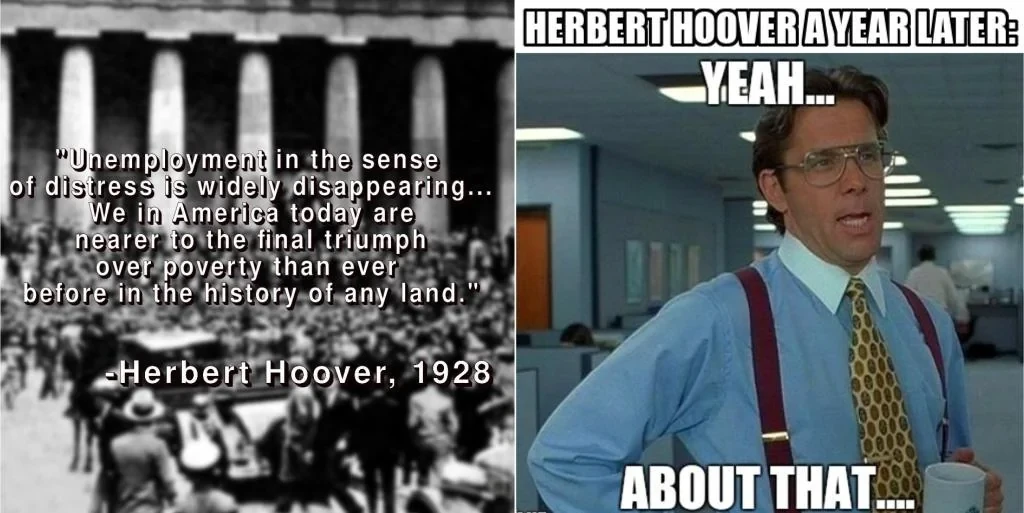
tbf, the 1920s were like, the poster-child for lassiez-faire bullshit. America’s prosperity in the 20s was largely built on speculation and Europe’s slow recovery from blowing the ever-loving shit out of each other in WW1. Once Europe started to recover, the US had to paper over the increasing problems from US industries trying to act like Europe was still desperate for their product.
It’s actually really sad - Calvin Coolidge, a rare and vocal anti-racist during the 1920s, was really economically progressive when he was a governor, but he had a bizarre view of Federal authority that meant he took the exact opposite position as president.
The 1950s are a better example insofar as we had the same leg-up of “Europe is just getting out of really bad straits and needs US economic contributions”, but a series of sensible domestic economic policies (we don’t talk about foreign policy 😬) enabled by the post-“New Deal” consensus by Truman, Eisenhower, and JFK ensured that US industry increasingly integrated and synchronized with the recovering world economies, in part by taxing the shit out of the rich and investing that money. A really fascinating aspect of the 1950s is that some of the richest investors in the country were actors because of the way Federal taxes had been set up to (partly successfully) stop new ultra-wealthy industrial magnates like Ford et co from rising again.
Not that it did anything against the ultra-wealthy families that already existed, but better a stopgap than nothing.